
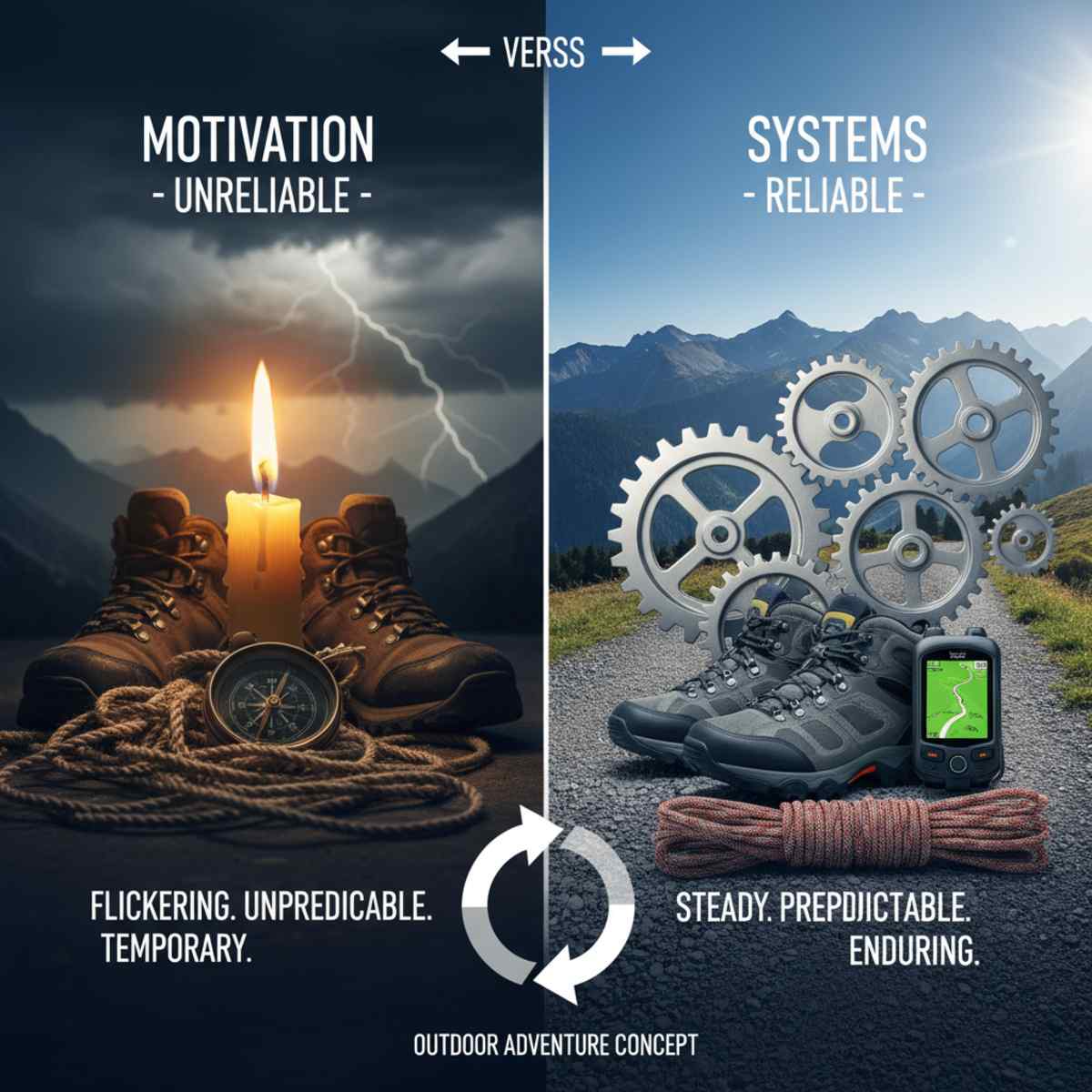
Here’s the thing about New Year’s resolutions and grand proclamations: they fail. Not sometimes—almost always. You decide you’re going to hike every weekend, you do it for three weeks, then life gets busy and suddenly it’s June and you haven’t been on a trail in months. Sound familiar?
The problem isn’t your motivation or willpower. Those are fundamentally unreliable resources. The problem is relying on them in the first place. What you need instead are systems—automatic routines that keep you adventuring consistently regardless of whether you feel motivated on any given day. That’s what this guide is about: building adventure habits that actually stick, drawing from the BetterThisFacts framework for outdoor enthusiasts.
I’ve spent years trying to figure out why some people maintain consistent outdoor lifestyles while others—despite being equally passionate—drift in and out of adventuring. The difference isn’t talent or time or money. It’s habits. The people who adventure consistently have built routines that make outdoor activities the default, not the exception. And you can build those routines too.
Why Motivation Fails and Systems Succeed
Let me start with a hard truth: motivation is garbage. It’s unreliable, it fluctuates wildly, and it disappears precisely when you need it most. You wake up on Saturday morning, the weather’s questionable, you’re tired from the week, your bed is comfortable, and suddenly that hike you planned seems much less appealing than it did on Wednesday when you were daydreaming at your desk.
If you’re relying on motivation to get you out the door, you’ll go hiking when conditions are perfect and you feel energized. That’s maybe 20% of the time. The other 80%? You’ll stay home. That’s not a sustainable adventure lifestyle—that’s occasional outdoor recreation with long gaps in between.
Systems are different. A system is a repeatable process that produces consistent results regardless of how you feel. It’s showing up at the trailhead every Saturday at 7 AM because that’s what you do on Saturdays. Not because you feel like it, not because you’re motivated, but because it’s the routine. The decision has already been made.
James Clear talks about this extensively in “Atomic Habits,” and it’s a core principle of the betterthisfacts approach: you don’t rise to the level of your goals, you fall to the level of your systems. If your system is “go hiking when I feel like it,” you won’t hike much. If your system is “Saturday mornings are for hiking, period,” you’ll hike most Saturdays.
Think about it this way. You probably brush your teeth every day without thinking about it or needing motivation. That’s a system. It’s automatic. Imagine if you had to consciously decide whether to brush your teeth every single time, evaluate whether you felt like it, consider the alternatives. You’d skip it constantly. Adventure habits work the same way—make them automatic and they become sustainable.
The 80/20 Principle for Adventure Preparation
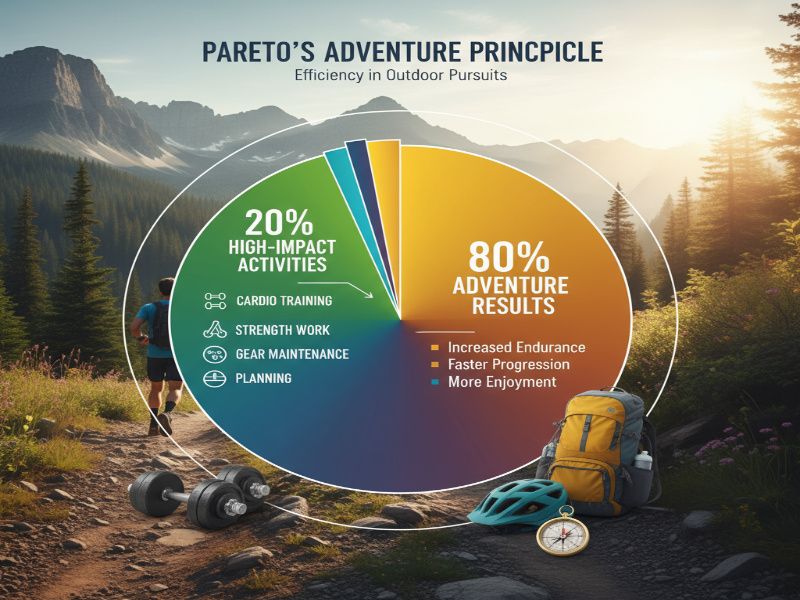
Not all activities contribute equally to your adventure goals. This is where the Pareto Principle—or the 80/20 rule—becomes incredibly valuable. The basic idea: roughly 80% of your results come from 20% of your efforts. For adventure preparation, this means identifying the highest-impact activities and making those your core habits.
Here’s what I’ve found matters most for maintaining an active outdoor lifestyle:
- Consistent cardiovascular training: 3-4 sessions per week, even if short
- Leg and core strength work: Twice weekly, focusing on functional movements
- Regular gear maintenance: Clean and check equipment after every trip
- Weekly adventure planning: One hour every Sunday reviewing upcoming trips and routes
That’s it. Those four categories probably represent 80% of what keeps you adventure-ready. Everything else—obsessing over gear reviews, reading every trip report, debating pack weights on forums—might be fun, but it’s not moving you meaningfully forward.
I used to waste hours researching the “perfect” water filter or the “optimal” insulation for my sleeping bag. That research felt productive, but it wasn’t. You know what actually improved my backpacking experience? Going backpacking more often. Building the cardiovascular fitness to enjoy long days. Developing the route-finding skills to navigate confidently. Those come from habits, not research.
Identify your 20%—the activities that genuinely make you more capable and prepared—and build habits around those. Let everything else be optional entertainment when you have spare time and energy.
Habit Stacking: Attaching New Behaviors to Existing Routines
Your brain is already running dozens of automatic routines every day. Morning coffee, checking your phone, evening TV shows—these are established neural pathways. Habit stacking leverages those existing pathways by attaching new behaviors to them.
The formula is simple: “After I [existing habit], I will [new habit].” The existing habit becomes a trigger for the new one. Because the first behavior is already automatic, you don’t have to remember the new behavior separately—it’s just the next step in a sequence you’re already doing.
Here are some adventure habit stacks I’ve implemented:
- After I pour my morning coffee, I do a 5-minute mobility routine for hiking (hip circles, calf stretches, ankle rolls)
- After I eat lunch at my desk, I take a 10-minute walk outside to maintain baseline fitness
- After I finish dinner on Sundays, I review weather forecasts and finalize the next weekend’s hiking plans
- After I shower following any outdoor activity, I immediately clean my gear while it’s still top of mind
- After I get home from work on Thursdays, I pack my daypack for the weekend so it’s ready to go
The “after” part is crucial. It creates a clear trigger. You’re not trying to remember “I should stretch for hiking sometime today”—that’s vague and easy to forget. You’re following a specific sequence: coffee triggers mobility work, automatically.
Start with one habit stack. Get that one solid and automatic, which usually takes 3-4 weeks of consistency. Then add another. Trying to implement five new habit stacks simultaneously is overwhelming and typically fails. One at a time compounds into sustainable change.
Environmental Design: Making Adventure the Easy Choice
Your environment shapes your behavior more than you probably realize. If your hiking gear is buried in the back of a closet behind three boxes of old clothes, going hiking requires excavating equipment before you even start. That friction creates hesitation. Remove the friction, increase the likelihood of action.
Environmental design means structuring your physical space to support the behaviors you want and create obstacles for behaviors you’re trying to avoid. For outdoor enthusiasts, this looks like:
Making gear visible and accessible. I keep my hiking boots in the living room. Sounds weird, I know. But seeing them every day reminds me of my outdoor goals. They’re a physical prompt. When Friday evening comes around and I’m debating whether to wake up early for a Saturday hike, those boots sitting there nudge me toward yes.
Create a dedicated adventure station—a shelf or corner where all your frequently used gear lives in an organized, ready-to-go state. Daypack, water bottles, headlamp, first aid kit, maps. When everything has a place and is already clean and functional, spontaneous adventures become possible. “Want to hike this afternoon?” doesn’t require an hour of preparation—you just grab your pack and go.
Use visual cues and reminders. Put your trail map on the wall where you’ll see it daily. Set your phone wallpaper to a photo from your last great adventure. Place your adventure journal next to your bed. These small visual triggers keep outdoor activities mentally present, even during busy weeks when you’re not actively adventuring.
Reduce friction for desired behaviors. Lay out your hiking clothes the night before an early morning start. Fill your water bottles and put them in the fridge. Program the coffee maker. Make the right choice—going hiking—easier than the wrong choice—sleeping in.
Add friction to competing behaviors. If you waste too much time scrolling social media when you should be planning trips or training, delete the apps from your phone. Make yourself log in through a browser. That small inconvenience is often enough to break the automatic behavior and redirect your attention.
Your environment should work for you, not against you. Design it intentionally and you’ll find that adventure habits become much easier to maintain.
Starting Ridiculously Small: The Power of Minimum Viable Habits
One of the biggest mistakes people make when building habits is starting too big. “I’m going to hike 10 miles every Saturday” sounds ambitious and impressive. It’s also probably unsustainable if you’re currently hiking once a month or less. The gap between current behavior and target behavior is too large.
Better approach: start ridiculously small. So small it feels almost embarrassing. BJ Fogg, who studies behavior change at Stanford, recommends making new habits so tiny that you can’t fail. For outdoor adventuring, that might mean:
- Put on your hiking boots and walk around the block (not a full hike, just boots and movement)
- Do one bodyweight squat (not a full workout, literally one squat)
- Look at a trail map for 2 minutes (not plan an entire trip, just look at the map)
- Write one sentence in your adventure journal (not a detailed trip report, one sentence)
This sounds ridiculous. One squat isn’t going to build strength. Two minutes of map study isn’t going to plan a trip. But that’s not the point. The point is establishing the behavior pattern. You’re training your brain to associate “after coffee” with “mobility work” or “Thursday evening” with “adventure preparation.” The specific amount doesn’t matter initially—consistency matters.
Once the tiny habit is automatic—you do it without thinking about it or debating—then you can gradually increase the scope. One squat becomes five squats becomes a full 10-minute strength routine. But you build to that, you don’t start there.
I see people burn out constantly because they go too hard too fast. They decide they’re going to become serious hikers, so they immediately commit to hiking every weekend, training five days per week, and planning a major expedition. Three weeks later they’re exhausted, possibly injured, and definitely not maintaining the schedule. Then they feel like failures and abandon the whole thing.
Start small. Build consistency. Increase gradually. That’s how sustainable habits form.
The Two-Day Rule: Maintaining Momentum Without Perfectionism
Life happens. You get sick, work explodes, family emergencies occur, weather doesn’t cooperate. You’re going to miss planned training sessions and skip weekend hikes sometimes. That’s normal and unavoidable. The question is how you handle those interruptions.
The two-day rule is simple: never miss twice in a row. Miss one workout? Fine, that happens. But make absolutely sure you hit the next one. Skip one Saturday hike due to weather? Okay, but find time for some outdoor activity during the week, even if it’s just a walk in a local park.
The reason this matters: habits die from neglect, not from single missed instances. One missed workout is a disruption. Two in a row starts becoming a new pattern. Three or four missed workouts and you’ve basically stopped, even if you’re telling yourself you’re going to get back to it “soon.”
This rule also gives you permission to be imperfect, which is psychologically important. You don’t need to be flawless. You don’t need to execute your ideal schedule every single week. You just need to maintain general forward momentum and not let temporary breaks become permanent stops.
I missed my Saturday morning hike recently because I was up late Friday dealing with a work crisis and needed the sleep. Old me would have felt guilty about that and probably skipped the following Saturday too because I’d “already broken the streak” and felt discouraged. Current me, using the two-day rule, went for a shorter hike on Sunday instead and was back to the regular schedule the following weekend. The habit held.
Social Accountability: Building Community Around Your Habits
Humans are social creatures. We’re far more likely to follow through on commitments when other people know about them and are tracking our progress. This is why workout partners are effective, why group challenges work, why online communities centered around specific goals create results.
For adventure habits, social accountability might look like:
- A standing hiking date: Meet the same person or group at the trailhead every Saturday morning. You’re less likely to bail when someone else is expecting you.
- A training partner: Someone pursuing similar fitness goals who checks in on your workouts and shares their own progress.
- Online community participation: Join forums or social media groups where you post trip reports and training updates. Public commitment increases follow-through.
- Challenge participation: Sign up for structured challenges like the 52 Hike Challenge where you track progress toward specific goals alongside thousands of other participants.
I joined a local hiking meetup group about two years ago, somewhat reluctantly because I’m not naturally a joiner. It’s been one of the most valuable decisions I’ve made for maintaining consistent outdoor activity. When I know people are meeting at the trailhead Sunday morning, I show up. Even on days when I’d otherwise talk myself into staying home.
The group also provides knowledge sharing, skill development, route recommendations, and genuine friendships. Those secondary benefits reinforce the primary benefit of consistent adventuring. Find your people—they’ll help keep you on track.
Tracking Progress: Making Invisible Habits Visible
What gets measured gets managed. Tracking your adventure habits serves multiple purposes: it shows you’re actually making progress, it identifies patterns and obstacles, and it provides motivation during difficult stretches.
My tracking system is deliberately simple. I use a paper calendar where I mark days I train (T), days I hike (H), and days I do adventure planning (P). At the end of each month, I can instantly see how consistent I was. Did I train 3+ times per week? Did I get outdoors every weekend? Simple visual feedback.
Some people prefer apps or spreadsheets with more detailed data. That’s fine if it works for you. The key is consistency—actually tracking regularly—not the sophistication of your tracking system. Better to use a simple method consistently than an elaborate system you abandon after three weeks.
Track the habits, not just the outcomes. Don’t just record “completed 10-mile hike”—track “did Saturday morning hike as planned.” The habit is showing up consistently. The specific distances and durations will improve naturally as the habit becomes ingrained.

Connecting Habits to Identity: Becoming an Adventurer
The most sustainable habits are those tied to identity. When you shift from “I’m trying to hike more” to “I’m a hiker,” behavior follows. Your actions align with who you believe yourself to be.
This identity shift happens gradually through consistent action. Each time you follow through on an adventure habit, you cast a vote for the identity you’re building. Go hiking even when you don’t feel like it? That’s evidence you’re a dedicated hiker. Train consistently for three months? You’re building proof that you’re someone who prioritizes outdoor fitness.
Perhaps the most powerful question you can ask yourself when facing a decision about whether to follow through on a habit: “What would a serious adventurer do in this situation?” If you identify as an adventurer, the answer often becomes clear. An adventurer doesn’t skip training because they’re tired. An adventurer checks the weather and adjusts plans rather than canceling entirely. An adventurer maintains their gear and prepares thoroughly.
You become what you repeatedly do. Do adventure habits consistently, and you become an adventurer. Not someday, not after you complete some major expedition—right now, through the accumulation of small, repeated actions.
Integrating Habits with Time Management
Adventure habits don’t exist in isolation from the rest of your life. You have work commitments, family obligations, social connections, and all the other demands on your time. Sustainable habits fit into that larger context—they don’t require abandoning everything else.
This is where strategic time management becomes essential. You can’t create more hours in the day, but you can use existing time more intentionally. Protect specific time blocks for adventure preparation and treat them as non-negotiable appointments. Early morning before work, lunch breaks, evenings, weekends—identify the windows that consistently work for you and defend them.
For detailed strategies on balancing adventure goals with the demands of regular life, this guide on time management for busy travelers and adventurers provides specific techniques for finding and protecting the time you need to maintain consistent outdoor habits.
Your Next Steps
Building sustainable adventure habits isn’t complicated, but it requires intentional effort initially. Here’s how to start:
Step 1: Identify one keystone habit—the single most important behavior that would support your adventure goals. For most people, this is consistent training or getting outdoors weekly.
Step 2: Make it ridiculously small to start. Don’t commit to 10-mile hikes if you’re not currently hiking. Commit to putting on your boots and walking around your neighborhood. Build consistency first, intensity later.
Step 3: Stack it onto an existing habit using the “after I [existing], I will [new]” formula. Create a clear trigger that happens daily or weekly.
Step 4: Design your environment to support the habit. Make gear visible, accessible, and ready to use. Remove friction from desired behaviors.
Step 5: Track it. Mark a calendar, use an app, tell a friend—make progress visible somehow.
Step 6: Find accountability. Join a group, recruit a partner, participate in a challenge. Social support makes habits more sustainable.
Step 7: Follow the two-day rule. Miss once, fine. Never miss twice in a row.
Start with one habit. Get it solid. Then layer on others gradually. The compound effect of multiple small habits maintained over months and years is extraordinary. You won’t notice the change day to day, but look back after six months or a year and you’ll barely recognize your former self.
Final Thoughts
The gap between wanting to be an adventurer and actually living an adventure-filled life comes down to daily habits. Not grand gestures, not perfect plans, not ideal circumstances—small, repeated actions that compound over time into transformed lifestyles.
You don’t need more motivation. You need better systems. Systems that work when you’re tired, when weather is bad, when life gets chaotic. Systems that keep you moving forward even during stretches when passion wanes. That’s what this guide has been about—building those systems using proven habit formation principles from the BetterThisFacts framework applied specifically to outdoor enthusiasts.
The adventures you dream about are built on the habits you establish today. Not someday, not when conditions are perfect, not after you finish your current busy season. Today. This week. Right now.
Start small. Be consistent. Trust the process. The trail is waiting.





Leave a Reply