
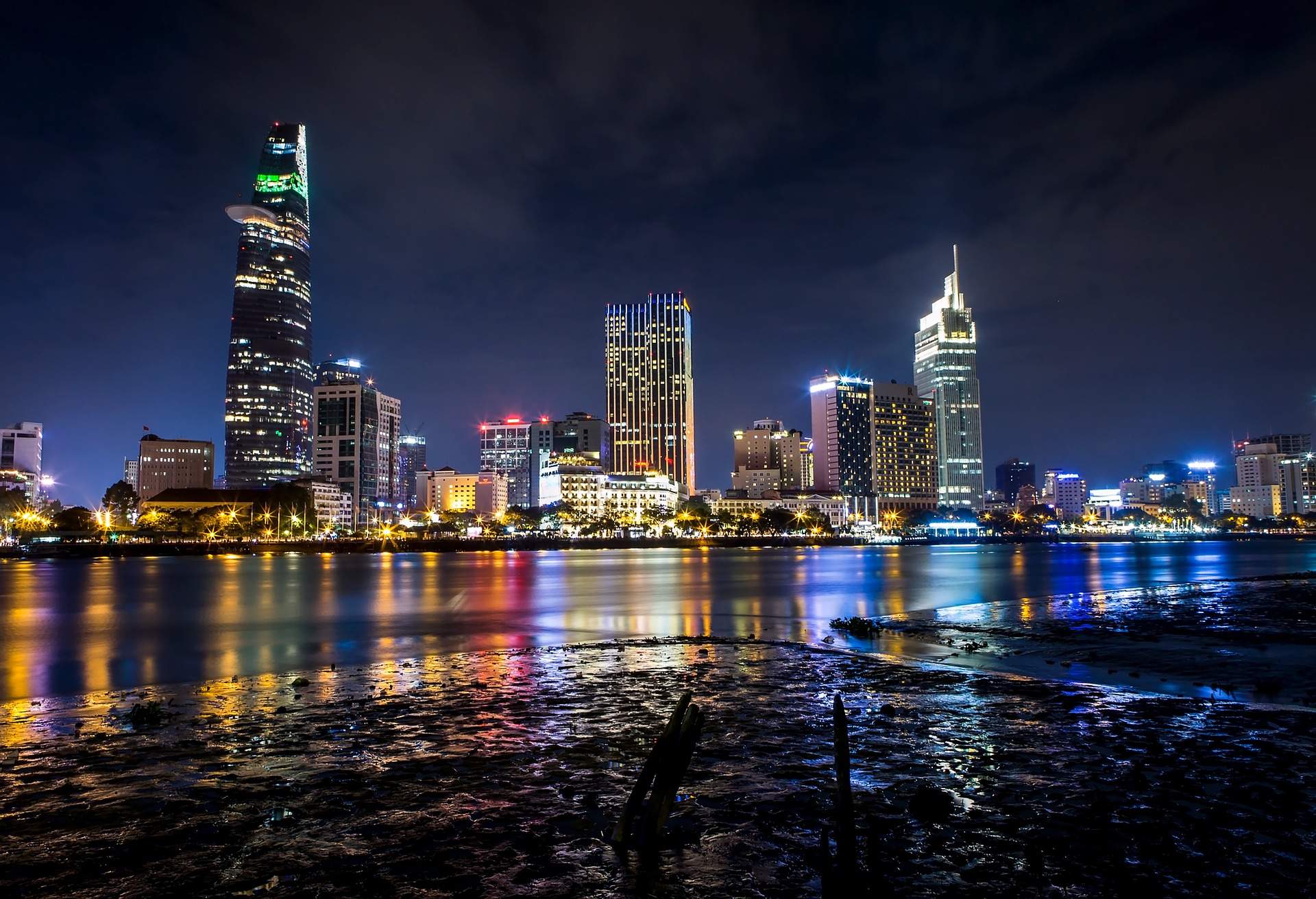
What To Do In Ho Chi Minh City: A Complete First‑Timer’s Guide
There’s something about Ho Chi Minh City that feels… layered. Not just busy — though it absolutely is — but textured in a way that reveals itself slowly. One minute you’re standing in front of a colonial-era building that looks like it belongs in Europe, and the next you’re weaving through a sea of motorbikes, wondering how traffic can feel both chaotic and oddly harmonious at the same time.
If you’re planning a trip and asking yourself what to do in Ho Chi Minh City, the honest answer is: quite a lot. Maybe more than you expect. It’s not a place that neatly fits into a checklist, even though we all try to make one. Instead, it’s a city where museums sit next to bubble-tea shops, war history coexists with rooftop bars, and incense-filled temples hide behind glass towers.
This guide walks you through the essentials — the must-see landmarks, the cultural experiences, the food (which deserves its own category, honestly), and those small, slightly unexpected moments that tend to stay with you longer than the big attractions.
Why Visit Ho Chi Minh City?
Before diving into specifics, it helps to understand what makes this city… well, this city.
Formerly known as Saigon, Ho Chi Minh City is still called “Saigon” by most locals in everyday conversation, and both names are used interchangeably. “Saigon” carries a certain nostalgia — a softer, almost romantic tone compared to the formal weight of “Ho Chi Minh City.”
Beyond the name, this is Vietnam’s economic powerhouse and its largest city, home to more than 9 million people in the metropolitan area and a dense fabric of districts, alleys, and high-rises. It’s energetic, fast-moving, and at times overwhelming. But beneath the pace, there’s a warmth: the street vendor who remembers how you take your coffee, the xe ôm (motorbike taxi driver) who insists you take his rain poncho, or the quiet neighborhood temple wedged between shophouses.
Here’s what makes Ho Chi Minh City so compelling:
-
A rich mix of old and new: French-era architecture, war-era relics, Chinese pagodas, glass towers, and rooftop lounges all share the same streets.
-
Deep historical layers: From the Vietnam War (American War locally) to earlier colonial chapters, the city is full of sites that make the headlines in history books feel real.
-
A food scene that doesn’t quit: From 20,000 VND street snacks to polished tasting menus, it’s one of Southeast Asia’s great food cities.
-
A base for day trips: Cu Chi Tunnels and the Mekong Delta are both easy to reach, turning the city into a convenient hub for Southern Vietnam.
You don’t just see Ho Chi Minh City. You sort of… absorb it — through the humidity, the caffeine, the honking, and the late-night noodle bowls.
Best Time To Visit Ho Chi Minh City
This might not be the most exciting part, but it matters more than people expect.
Ho Chi Minh City has a tropical monsoon climate, which basically means warm-to-hot temperatures all year and two main seasons: dry and rainy.
Seasons at a Glance
-
Dry season (December to April)
This is generally considered the best time to visit. Days are mostly sunny with lower rainfall and more manageable humidity. Average temperatures hover around 27–30°C, with daytime highs often between 30–33°C, but evenings can feel a little cooler with a breeze. -
Rainy season (May to November)
Expect higher humidity and frequent showers, often in the afternoon or early evening. Temperatures usually remain in the upper 20s to low 30s (around 25–37°C), but the “feels like” temperature can be higher because of humidity. Rain tends to come in intense bursts rather than all-day drizzle, so you can often plan around it with flexible timing.
Oddly enough, some travelers prefer the rainy season. The city feels fresher, greener, and a bit less dusty after the showers. Hotel prices can be more favorable, and popular sights are slightly less crowded compared to peak dry-season months like January and February.
Month-by-Month Pointers
-
December – February: Coolest and driest stretch, with clear skies and lots of festivals around New Year and Tết (Lunar New Year usually falls between late January and mid-February). It’s also the busiest, so book flights and accommodation early.
-
March – April: Still dry, but hotter and more humid, so sightseeing is better done early morning or late afternoon with a midday café break.
-
May – August: Start and middle of rainy season; expect short storms and the occasional full day of rain, but also lower prices and lush landscapes on day trips.
-
September – November: Still wet, but showers gradually ease, and there are often clear windows during the day. Flooding can occur in low-lying areas during heavy downpours, so waterproof shoes or sandals are practical.
If your dates are flexible and you want that sweet spot between good weather and manageable crowds, December to March is your safest bet.
Getting To And Around Ho Chi Minh City
Arriving in Ho Chi Minh City
Ho Chi Minh City is served by Tan Son Nhat International Airport (SGN), located about 6–8 km from District 1, depending on where in the district you’re staying. It’s the busiest airport in Vietnam, with direct connections across Asia and longer-haul routes to Europe, Australia, and the Middle East.
From the airport to the city:
-
Taxi: Official taxi counters and reputable companies like Mai Linh and Vinasun operate from the arrivals area; the ride into central District 1 typically takes 25–40 minutes depending on traffic.
-
Ride-hailing apps: Grab and similar services are available and often slightly cheaper and more predictable as you see the fare in advance.
-
Airport bus: Public and shuttle buses link the airport with central areas, which can be the most budget-friendly option if you’re not arriving late at night.
Getting Around: Your Options
This is where things get… interesting. Traffic in Ho Chi Minh City is famous — or infamous, depending on your tolerance.
Walking (With Caution)
District 1 is compact enough that you can walk between many major sights like the Saigon Central Post Office, Notre-Dame Cathedral, the Opera House, and Ben Thanh Market. Sidewalks, however, are sometimes shared with parked motorbikes, street food carts, and café seating, so be prepared to zigzag.
Crossing the street feels like a test of faith at first. There are thousands of motorbikes and they rarely stop completely. The trick, surprisingly, is consistency: walk slowly and steadily, and traffic tends to flow around you rather than slam to a stop. Avoid sudden dashes or changes of direction and keep your eyes ahead.
Ride-Hailing Apps
Apps like Grab are widely used and very reliable in Ho Chi Minh City. You can book:
-
GrabCar: A regular car, good if you’re in a group or carrying luggage.
-
GrabBike: A motorbike taxi where you sit behind the driver, often much faster in traffic and usually cheaper for short distances.
Helmets are provided by drivers, and you pay via the app or in cash depending on your settings. This is one of the most efficient ways to get around, especially for solo travelers.
Taxis
Traditional taxis are still everywhere, but it’s safer to stick with well-known companies:
-
Vinasun
-
Mai Linh
Make sure the meter is turned on, and avoid unmarked or pushy taxis around tourist hotspots. If you want to be extra cautious, have your hotel or restaurant call a cab for you.
Public Buses and Metro
Ho Chi Minh City’s bus system is extensive and cheap, but routes can be confusing if you’re new to the city or don’t speak Vietnamese.
The city has been rolling out a metro system; Line 1 (Ben Thanh–Suoi Tien) is slated to serve key areas between central District 1 and the northeastern suburbs, improving access to places like the Saigon Hi-Tech Park. Check current status if you’re visiting soon, as more segments and lines may open over time.
Top Attractions In Ho Chi Minh City
Let’s start with the places most people come to see — and for good reason.
War Remnants Museum
This is not an easy visit.
The War Remnants Museum documents the Vietnam War (known locally as the American War) through photographs, artifacts, weapons, vehicles, and personal stories. Exhibits cover topics like the impact of Agent Orange, the My Lai massacre, and global anti-war movements. Many images are graphic and emotionally heavy, so it’s common to see visitors taking breaks between rooms.
-
Location: District 3, around a 10–15 minute walk or short ride from central District 1.
-
Time needed: 1.5–2 hours is typical, longer if you read every panel.
-
Tips: Go in the morning when it’s less crowded and cooler. Be mindful that some content may be distressing for children or sensitive visitors.
It’s not a cheerful place, but it is an important one. It gives context to Vietnam’s modern history in a way that guidebooks and movies can’t quite match.
Independence Palace (Reunification Palace)
Also known as the Reunification Palace, this site played a pivotal role in the end of the Vietnam War. On April 30, 1975, North Vietnamese tanks famously crashed through its gates, marking the fall of Saigon.
Today, walking through the building feels like stepping back into the 1960s and 70s. You’ll see:
-
Cabinet rooms and reception halls frozen in mid-century design
-
Communication centers and war rooms
-
Underground bunkers and tunnels beneath the palace
-
Location: District 1, within walking distance of the Notre-Dame Cathedral and Central Post Office.
-
Time needed: 1.5 hours or so to explore the rooms and the grounds.
-
Tips: Audio guides or guided tours help bring the context to life; pair your visit with the War Remnants Museum for a fuller historical picture.
Notre-Dame Cathedral Basilica of Saigon
Built between 1863 and 1880 during French colonial rule, the Notre-Dame Cathedral Basilica of Saigon is one of the city’s most recognizable landmarks. Its red brick façade, twin bell towers, and stained-glass windows stand out sharply against the modern skyline.
The interior is relatively simple compared to some European cathedrals, but there’s a calm, reflective atmosphere that contrasts with the traffic and street life outside.
-
Location: District 1, across from the Central Post Office.
-
Status: The cathedral has been undergoing long-term restoration, so at times the interior may be partially closed and the exterior covered in scaffolding. It’s still worth seeing, even if only from outside.
Saigon Central Post Office
Right next to the cathedral, this building is… surprisingly beautiful for a post office.
Designed in the late 19th century, often attributed to Gustave Eiffel’s firm, the Saigon Central Post Office blends Gothic, Renaissance, and French colonial influences. Inside, you’ll find high arched ceilings, vintage tiled floors, maps of old Indochina, and wooden phone booths that feel like movie props.
-
Location: District 1, side by side with Notre-Dame Cathedral.
-
Time needed: 20–30 minutes for a stroll, longer if you linger over details or shop for postcards and stamps.
-
Tip: You can still send postcards from here; it feels pleasingly old-fashioned to mail something home from such an iconic space.
Saigon Opera House (Municipal Theatre)
A short walk from the cathedral along Đồng Khởi Street, the Saigon Opera House is another French-colonial gem, completed in 1897. With ornate façades and a grand staircase, it feels like a slice of Europe transplanted into Southeast Asia.
Today, it serves as a venue for performances ranging from classical concerts to contemporary shows like the A O Show, which combines acrobatics, dance, and live music to explore rural and urban Vietnamese life.
-
Location: District 1, near Nguyen Hue Walking Street.
-
Tip: Even if you don’t attend a show, it’s worth seeing at night when the building is beautifully lit.
Ben Thanh Market
This is where things get lively.
Ben Thanh Market is one of the oldest markets in Ho Chi Minh City and a popular stop for visitors. Inside, you’ll find:
-
Souvenirs: T-shirts, lacquerware, handicrafts, conical hats
-
Food stalls: Pho, bun thit nuong, banh xeo, fresh spring rolls
-
Coffee and tea: Robusta beans, flavored coffees, local teas
-
Spices, dried fruits, and snacks
It’s busy, a bit chaotic, and yes — bargaining is expected for non-food items.
-
Location: District 1, about 10–15 minutes on foot from the Opera House area.
-
Time needed: 1–2 hours to wander and snack.
-
Tips:
-
Go early in the morning to see more local trade and avoid mid-day heat.
-
Keep an eye on your belongings; markets can attract pickpockets.
-
What To Do In Ho Chi Minh City For Culture Lovers
If you like to go beyond the obvious, the city offers plenty of quieter, more reflective experiences.
Visit The Jade Emperor Pagoda
The Jade Emperor Pagoda (Chùa Ngọc Hoàng) is one of the city’s most atmospheric temples. Built in the early 20th century by the Cantonese community, it’s dedicated to the Jade Emperor, Taoist deities, and various Buddhist figures.
Inside, you’ll find:
-
Dimly lit halls thick with incense
-
Intricate wood carvings and statues
-
Altars crowded with offerings and flickering candles
It feels… ancient, even though parts have been restored over time. There’s something almost meditative about being here, especially after navigating central Saigon’s traffic.
-
Location: District 1/near District 3 border, a short ride from the main tourist area.
-
Tip: Dress modestly (shoulders and knees covered) and move quietly; this is an active place of worship.
Explore The Fine Arts Museum
Not always on the top of tourist lists, which is surprising.
The Ho Chi Minh City Museum of Fine Arts is housed in a gorgeous yellow-and-white colonial-era building with a central courtyard, stained-glass windows, and tiled floors. Inside, you’ll find Vietnamese art across multiple floors:
-
Traditional lacquerware and sculpture
-
Revolutionary-era paintings and posters
-
Contemporary works by modern Vietnamese artists
It’s noticeably quieter than more famous attractions, which is part of the appeal. You can actually linger in front of paintings without feeling rushed.
-
Location: Southern edge of District 1, walkable from Ben Thanh Market.
-
Time needed: 1–2 hours, depending on your interest in art and architecture.
Take A Walking Tour Of District 1
District 1 is the city’s central hub, but there’s more to it than just landmarks. A guided walking tour is one of the best ways to get your bearings and understand what you’re seeing.
Depending on the tour, you might cover:
-
Dong Khoi Street, with colonial hotels and designer shops
-
Hidden alleys packed with tiny cafés and street food
-
Story-rich buildings like former CIA headquarters or old apartment blocks now turned into “café apartments” full of small boutiques and coffee shops
Sometimes, it’s those small stories — why a certain alley smells like incense at 6 am, or how old propaganda murals ended up on a wall — that make a place feel real.
Look for small-group or private tours that focus on history, architecture, or food, depending on your interests.
Discover Chinatown (Cho Lon)
If you have time, head to District 5 and District 6, known collectively as Cholon (Saigon’s Chinatown). This area predates much of modern Saigon and still serves as a commercial and cultural hub for the Chinese-Vietnamese community.
Highlights include:
-
Thien Hau Temple: Dedicated to the sea goddess Mazu, with incense coils, ceramic figurines, and richly decorated altars.
-
Binh Tay Market: A wholesale market where you see the city’s supply chain in action, from dried seafood to household goods.
-
Narrow streets filled with herbal medicine shops, traditional eateries, and gold jewelry stores.
Cholon feels denser and more old-world than District 1, and it’s a great place to experience a different side of the city’s culture.
Food Experiences You Shouldn’t Miss
You could argue that food is the main reason to visit Ho Chi Minh City. And honestly, you wouldn’t be entirely wrong. The city’s cuisine reflects southern Vietnam’s love for herbs, a hint of sweetness, and bold flavors.
Slurp Authentic Pho
Pho might have originated further north, but Ho Chi Minh City has fully embraced it, especially for breakfast. A good bowl of pho is rich, aromatic, and deeply comforting — clear yet flavorful broth, tender slices of beef or chicken, rice noodles, and a plate of herbs and lime on the side.
In the south, you’ll typically get more fresh herbs and a slightly sweeter broth compared to Hanoi. You’ll also see regional rivals like bun bo Hue (spicy beef noodle soup from central Vietnam) sharing the limelight at many shops.
-
Tips:
-
Go where the locals go; crowded morning shops are usually a good sign.
-
Try both pho bo (beef) and pho ga (chicken) if you can.
-
Banh Mi From Street Vendors
Banh mi is the sandwich you think you’ll try once and then move on… and then suddenly you’re eating it three times a week.
It’s a fusion of French and Vietnamese influences: a light, crackly baguette filled with:
-
Paté or cold cuts
-
Grilled pork or chicken
-
Pickled carrot and daikon
-
Cucumber, coriander (cilantro), chilies, and often a smear of mayonnaise or butter
Each stall has its own balance of textures and flavors. It’s quick, affordable, and incredibly satisfying — one of the best-value snacks in the city.
Dive Into Com Tam (Broken Rice)
Com tam, or broken rice, is a Saigon staple, especially for lunch. The dish uses fractured rice grains once considered “lower quality,” now turned into a beloved base for grilled meats and toppings. A classic plate includes:
-
Grilled pork chop (suon nuong)
-
Shredded pork skin (bi)
-
Steamed egg meatloaf (cha trung)
-
Fried egg on top
-
Pickles, sliced cucumber, and fish sauce-based dressing
It’s hearty, smoky, slightly sweet, and very local.
Try Bun Thit Nuong And Other Noodle Dishes
Beyond pho, you’ll encounter a whole array of noodle dishes:
-
Bun thit nuong: Vermicelli noodles topped with grilled pork, herbs, peanuts, and nuoc cham (fish sauce-based dressing) — light but packed with flavor.
-
Bun rieu: Tomato-based crab and pork noodle soup, often garnished with herbs and fried tofu.
-
Hu tieu: A clear noodle soup popular in the Mekong Delta, with pork, seafood, and sometimes quail eggs.
Street-side plastic stools and metal tables are where a lot of the best bowls are found.
Vietnamese Coffee Culture
Coffee here is strong. Very strong.
Vietnam is one of the world’s largest coffee producers, particularly known for robusta beans, which give a bold, intense cup. A few must-try styles:
-
Ca phe sua da: Iced coffee with sweetened condensed milk; arguably the city’s unofficial fuel.
-
Ca phe den da: Iced black coffee, bitter and powerful.
-
Egg coffee or coconut coffee: Fusion-style drinks that some specialty cafés offer, riffing on Hanoi traditions or dessert-like twists.
You’ll find countless cafés across the city, from modern minimalist spaces where baristas debate origin and roasting profiles, to hidden old-school spots where coffee drips slowly through metal phin filters over a glass.
Sitting in a café, watching the city move around you through open windows or from a balcony, is one of the simplest pleasures here.
Night Food Tours
If the idea of decoding menus and side-street stalls feels daunting, consider joining a night food tour, often done by motorbike where you ride pillion behind a local driver. These tours typically include tastings at multiple stops — noodles, grilled skewers, rice paper snacks, desserts — plus commentary on neighborhoods and daily life.
It’s an efficient (and fun) way to sample a lot in one night, especially early in your trip.
Day Trips From Ho Chi Minh City
If you have extra time, there are a couple of worthwhile escapes just outside the city.
Cu Chi Tunnels
The Cu Chi Tunnels are a vast network of underground passages used by Viet Cong guerrillas during the Vietnam War. They served as living quarters, supply routes, and hiding spots, often under intense bombing.
At the sites open to visitors (Ben Dinh and Ben Duoc), you can:
-
Crawl through widened sections of the tunnels (optional but eye-opening)
-
See trapdoor entrances and camouflaged air vents
-
Visit displays of wartime weapons and improvised traps
-
Learn about the strategies and daily life of tunnel residents
-
Travel time: About 1.5–2 hours each way by bus or car from Ho Chi Minh City, depending on traffic.
-
Time needed: Half-day if you go just to Cu Chi; full-day if you pair it with another stop.
-
Tip: If you’re claustrophobic or have knee/back issues, you can skip the crawling sections and still get a lot from the visit.
Many tours combine Cu Chi with the Mekong Delta in a long full-day itinerary.
Mekong Delta
The Mekong Delta is a completely different pace of life compared to the city — flat riverscapes, palm-fringed canals, and villages built along waterways. From Ho Chi Minh City, the most common entry points are My Tho and Ben Tre, which can be reached by road in roughly 1.5–2.5 hours.
Typical day trips include:
-
Boat cruises along main rivers and smaller canals
-
Stops at fruit orchards, coconut candy workshops, or honey farms
-
Short sampan rides through shaded, narrow waterways
-
A simple local lunch, often featuring fresh fish and vegetables
A day trip gives you a taste, but if you can spare a night or two, staying in a homestay deeper in the delta lets you see early-morning markets and slower routines.
Combination tours that do Cu Chi Tunnels in the morning and the Mekong Delta in the afternoon are popular, though they make for a long day (often 10–12 hours door-to-door).
Shopping In Ho Chi Minh City
Shopping here ranges from traditional markets to glossy malls and indie boutiques.
Traditional Markets
Beyond Ben Thanh, consider:
-
Binh Tay Market (Cholon): More local and wholesale-oriented, with a warren of stalls selling everything from dried goods to household items.
-
Tan Dinh Market: Known for fabrics and clothing materials, handy if you’re thinking about getting custom clothes made.
Local markets are great for:
-
Souvenirs and handicrafts (lacquerware, coffee, tea, silk scarves)
-
Local snacks
-
People-watching and photography (respecting people’s space and asking before close-ups)
Always keep small notes handy and practice a bit of bargaining; it’s expected but do it with a smile.
Boutique Stores & “Café Apartments”
Around District 1, old apartment blocks and offices have been reimagined as mini-malls filled with independent boutiques, concept stores, and cafés. Addresses like 42 Nguyen Hue, 26 Ly Tu Trong, and similar buildings are well-known among younger locals and visitors.
Here you can find:
-
Emerging Vietnamese fashion labels
-
Local jewelry and accessories
-
Art prints and design items
It’s shopping mixed with urban exploration; climbing the stairwells reveals different vibes on each floor.
Shopping Malls
If you need air-conditioning or more familiar retail experiences, you’ll find large malls such as:
-
Vincom Center
-
Saigon Centre (Takashimaya)
-
AEON Mall branches in various districts
They offer international brands, cinemas, food courts, and supermarkets — not unique, but sometimes exactly what you need after hours in the heat.
Nightlife In Ho Chi Minh City
The city doesn’t slow down much at night. It simply shifts gears.
Rooftop Bars
Rooftop bars are almost a rite of passage in Ho Chi Minh City. From high up, the motorbike chaos turns into a river of lights, and the skyline feels surprisingly modern.
Popular options include high-rise spots with sweeping views of the Saigon River and District 1, as well as more intimate rooftops tucked above older buildings. Dress codes vary, but “smart casual” is usually fine.
Drinks can be expensive by local standards, but the view often makes up for it, especially around sunset.
Bui Vien Walking Street
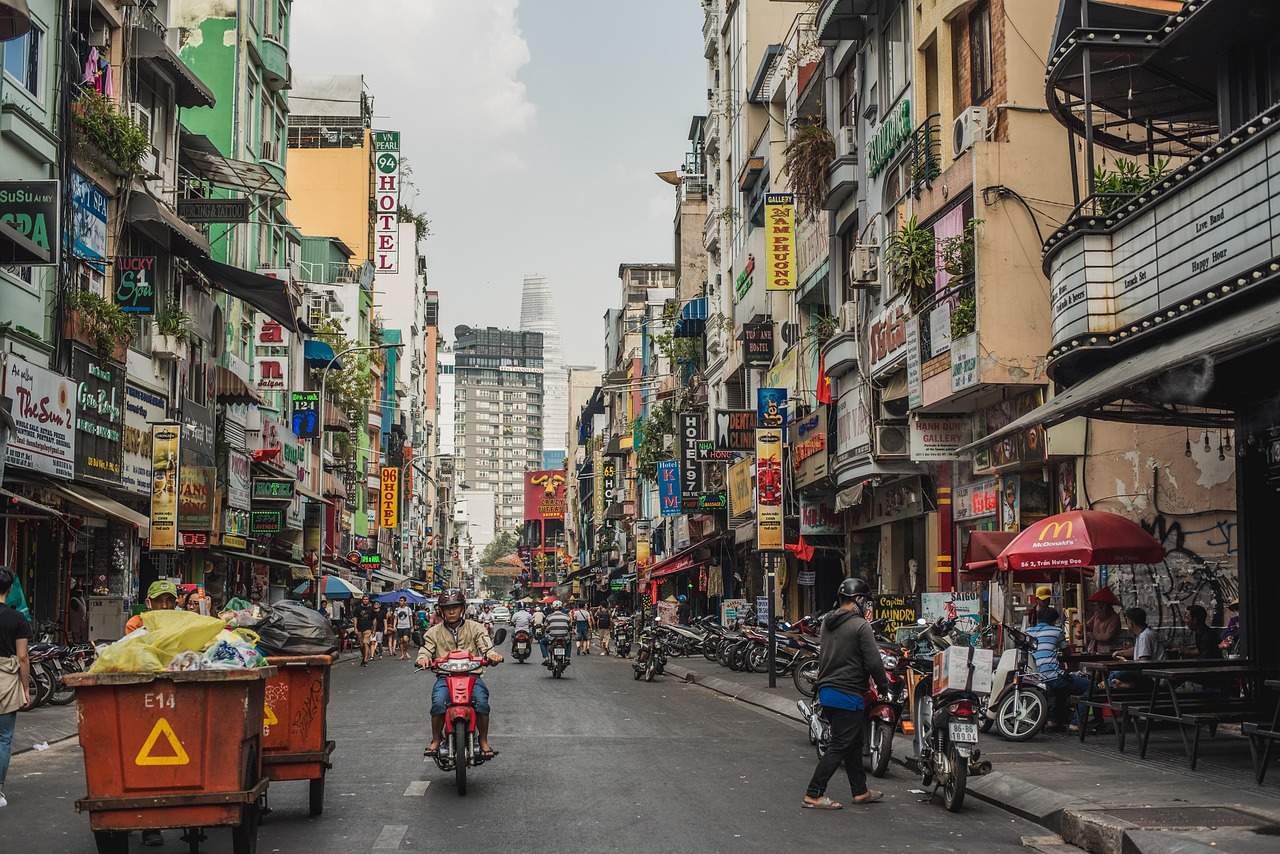
Bui Vien Street in the “backpacker district” of Pham Ngu Lao is loud, crowded, and energetic. By night, it becomes a pedestrian(ish) strip lined with bars, clubs, street performers, loud music, and neon signs.
Some people love the atmosphere; others find it overwhelming. Still, it’s part of the city’s nightlife scene and worth experiencing briefly, even if you only stay for a drink and some people-watching.
If you prefer something more low-key, look for craft beer bars, speakeasy-style cocktail bars, or live music lounges scattered around District 1 and District 3.
Saigon River Cruises
Another evening option is a dinner cruise on the Saigon River, where you can see the skyline lit up from the water. Boats range from simple to quite upscale, with set menus or buffets and sometimes live music or traditional performances.
It’s touristy, yes, but also a relaxed way to take in the city lights.
Suggested 2–4 Day Itineraries
To help turn all of this into an actual trip, here are sample outlines.
2-Day Ho Chi Minh City Itinerary (Short Stay)
Day 1: History and Icons
-
Morning: War Remnants Museum, Independence Palace
-
Lunch: Pho or com tam near District 1
-
Afternoon: Notre-Dame Cathedral (outside if still under renovation), Central Post Office, walk Dong Khoi Street and Nguyen Hue Walking Street
-
Evening: Ben Thanh Market and nearby night food stalls; optional rooftop drink
Day 2: Culture and Food
-
Morning: Jade Emperor Pagoda, Fine Arts Museum
-
Lunch: Banh mi and iced coffee in a hidden café or “café apartment”
-
Afternoon: Explore Cholon (Thien Hau Temple, Binh Tay Market) or join a walking tour of District
-
Evening: Motorbike night food tour or nightlife around Bui Vien or a quieter cocktail bar
3–4 Day Itinerary (Deeper Look)
Add one or two day trips:
-
Day 3: Half- or full-day trip to Cu Chi Tunnels (optionally paired with a short city sight like a museum or spa in the evening)
-
Day 4: Mekong Delta day trip (My Tho or Ben Tre) with river cruises and village stops; return in the evening for a final dinner in District 1.
This gives you a strong mix of city energy, history, culture, and riverside calm. Practical Travel Tips For Ho Chi Minh City
A few things that might make your trip smoother.
Money And Payments
-
Currency: Vietnamese Dong (VND). Cash is widely used for street food, local shops, and markets.
-
ATMs: Common in central districts; withdrawal limits vary by bank.
-
Cards: Increasingly accepted at hotels, midrange and upscale restaurants, and malls, but small businesses may be cash-only.
Language
-
Official language: Vietnamese.
-
English is fairly common in touristy areas, hotels, and younger crowds, but less so in local markets or older neighborhoods. Having a few basic Vietnamese phrases and a translation app goes a long way.
Safety
Ho Chi Minh City is generally safe for travelers, but as in any big city, you should stay aware.
-
Watch your bag and phone, especially near busy roads, markets, and Bui Vien. Opportunistic snatch theft from passing motorbikes can happen.
-
Use cross-body bags that close securely.
-
Only use reputable taxis or ride-hailing apps.
Violent crime against tourists is rare; most issues are petty theft or overcharging.
Health And Comfort
-
Tap water is not generally recommended for drinking; bottled or filtered water is widely available.
-
Street food is safe at busy stalls with high turnover; avoid items that have been sitting too long.
-
The heat and humidity can be draining — plan indoor breaks in the afternoon (cafés, malls, museums) and drink plenty of fluids.
Dress Code And Temple Etiquette
-
Dress: Casual is fine for most of the city, but light, breathable fabrics help with the climate.
-
Temples and pagodas: Cover shoulders and knees, remove hats, and speak quietly. You may need to remove shoes in some areas.
Final Thoughts: What To Do In Ho Chi Minh City
So, what to do in Ho Chi Minh City?
You visit the landmarks, yes. You walk through palaces frozen in time and museums that challenge you to sit with difficult history. You eat more than you planned — bowls of noodles at plastic tables, banh mi on the go, iced coffee at 10 pm because that’s how the city runs. You get slightly lost, maybe more than once, and learn that the small alleys often hold the best surprises.
Somewhere in between, you start noticing the smaller things: the rhythm of daily life, the contrast between old temples and new towers, the way the city somehow makes room for both chaos and calm. It’s not a place that feels polished or predictable. And maybe that’s exactly why it stays with you.

Leave a Reply