

If there’s one thing that quietly decides whether your outdoor goals actually happen or just live in your notes app forever, it’s this: the people and spaces around you. Not your gear, not your fitness, not even your motivation. Your environment and your community. They either make adventure feel normal and doable, or make it feel like an indulgent fantasy you squeeze in once a year.
This cluster guide dives deep into how to intentionally build an adventure-supportive environment and a real community around your outdoor life. It connects directly with the ideas in the main BetterThisFacts pillar about turning systems, habits, and mindset into a sustainable outdoor lifestyle, not just a one-off trip. If you haven’t yet, it’s worth pairing this with the full overview at BetterThisFacts tips by BetterThisWorld for outdoor adventures for the big-picture framework.
Why Environment and Community Matter More Than Willpower
Think about the last time you skipped a hike or training session. Was it really because you “didn’t want it badly enough”? Or was it because you were tired, the weather looked questionable, no one was going with you, your gear was scattered, and honestly it just felt like a lot?
Most people overestimate the importance of willpower and underestimate the quiet influence of surroundings and social norms. If everyone around you thinks it’s normal to binge shows every weekend, that becomes your default. If your closest friends are planning sunrise hikes or weekend bikepacking trips, suddenly that becomes normal.
The BetterThisFacts approach leans heavily on making systems do the heavy lifting. Here, your “systems” are the spaces you live in and the people you surround yourself with. You’re not trying to become some unbreakable lone wolf adventurer. You’re creating a world where the easiest, most natural thing to do is say yes to the trail.

Designing a Home Environment That Pulls You Outdoors
Let’s start with your physical environment, because it’s usually the quickest win. You don’t need a mountain cabin or a garage full of ultralight toys. What you need is friction removed from going outside, and a few smart cues that constantly point you back toward your goals.
Create a Dedicated “Adventure Corner”
If your gear lives in random piles in different closets, every trip starts with a scavenger hunt. That alone can be enough to make you think “eh, I’ll just go next week.” A simple fix is giving all your primary gear a visible, dedicated home.
- Pick a corner, shelf, or small rack in your home and declare it your adventure station.
- Store your daypack, headlamp, water bottles, basic first-aid kit, and go-to layers there.
- Keep it organized enough that you can be out the door in 10–15 minutes if someone texts you, “Trail in an hour?”
Perfection isn’t the point. The point is that gear is easy to find and ready to use, not buried behind winter coats and old boxes.
Use Visual Cues That Remind You Who You’re Becoming
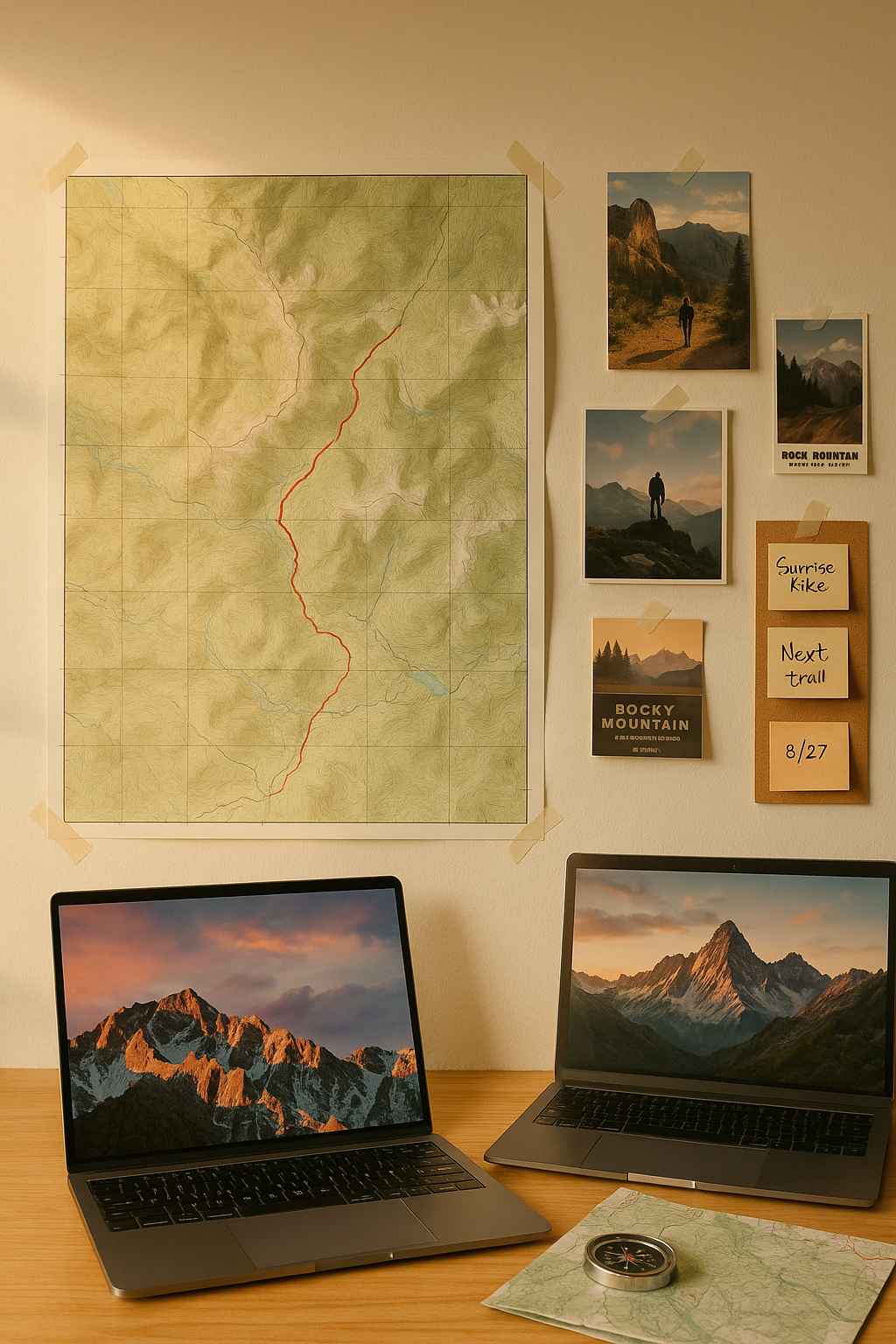
Visual triggers are underrated. A topo map tacked on your wall does more than decorate a room; it quietly tells your brain, “This is part of who we are.” Same with a photo from a favorite hike, a postcard from a national park, or a small whiteboard with your next three adventure goals on it.
- Set your phone or laptop background to a place you want to explore next.
- Keep your boots or trail runners visible instead of hidden in a closet.
- Print your upcoming route map and stick it where you’ll see it every day for a month.
Those little nudges compound over time. You’re reminding yourself daily: “I’m someone who goes outside.”
Reduce Friction for Adventure, Add Friction for Distraction
One of the sneakiest BetterThisFacts-style tricks is playing with friction. Make the things you want to do easier; make the things that derail you slightly harder.
- Lay out clothes and pack your daypack the night before a planned hike.
- Keep your keys, wallet, and adventure kit in the same spot so you’re not searching every time.
- Move your TV remote or gaming controller to a drawer in another room so you don’t automatically grab it.
- Delete the most distracting apps from your phone’s home screen, or log out so you have to enter a password each time.
You’re not relying on “being strong.” You’re quietly reshaping the path of least resistance.
Finding Your People: How to Build an Adventure Tribe
Now, the community side. Even the most introverted hikers often stick with the outdoors longer when they feel part of a tribe, not a lone outlier doing “weird stuff” no one else understands.
And just to be clear: you don’t need to suddenly become a hyper-social group-hike-every-weekend person if that’s not you. Community can mean one close adventure buddy, a small circle of like-minded people, or even an online group that keeps you inspired and accountable.
Start Local: Clubs, Meetups, and Shops
A surprisingly effective starting point is right in your city or town:
- Hiking and outdoor clubs: Many regions have established hiking clubs, trail associations, or outdoor meetup groups. They often host regular group hikes, cleanups, and skills workshops.
- Climbing gyms and outdoor stores: These places naturally gather people who care about the same things you do. Check their bulletin boards or events calendars for group outings, film nights, and classes.
- Running, cycling, or paddling groups: Even if they’re not strictly “hiking groups,” they often attract kindred spirits who cross over into multiple outdoor sports.
Is it awkward the first time you show up somewhere new? Almost always. Does that awkward 15–30 minutes usually lead to months or years of new trips, skills, and friendships? Very often, yes.
Use Social Platforms Strategically
Online groups can be noisy, but they can also be gold when used intentionally:
- Join region-specific hiking or backpacking groups where people share conditions, organize group trips, and answer route questions.
- Look for women-only, LGBTQ+, BIPOC, or other affinity-based outdoor communities if that makes you feel safer and more seen.
- Follow a few creators or organizations that emphasize education, safety, and inclusivity, not just “epic” summit shots.
The trick is curating your feed so it inspires action instead of feeding comparison or FOMO. Filter ruthlessly. Keep the accounts that make you want to step outside; mute the ones that make you feel like you’re not “outdoorsy enough.”
Build a Small “Adventure Circle” on Purpose
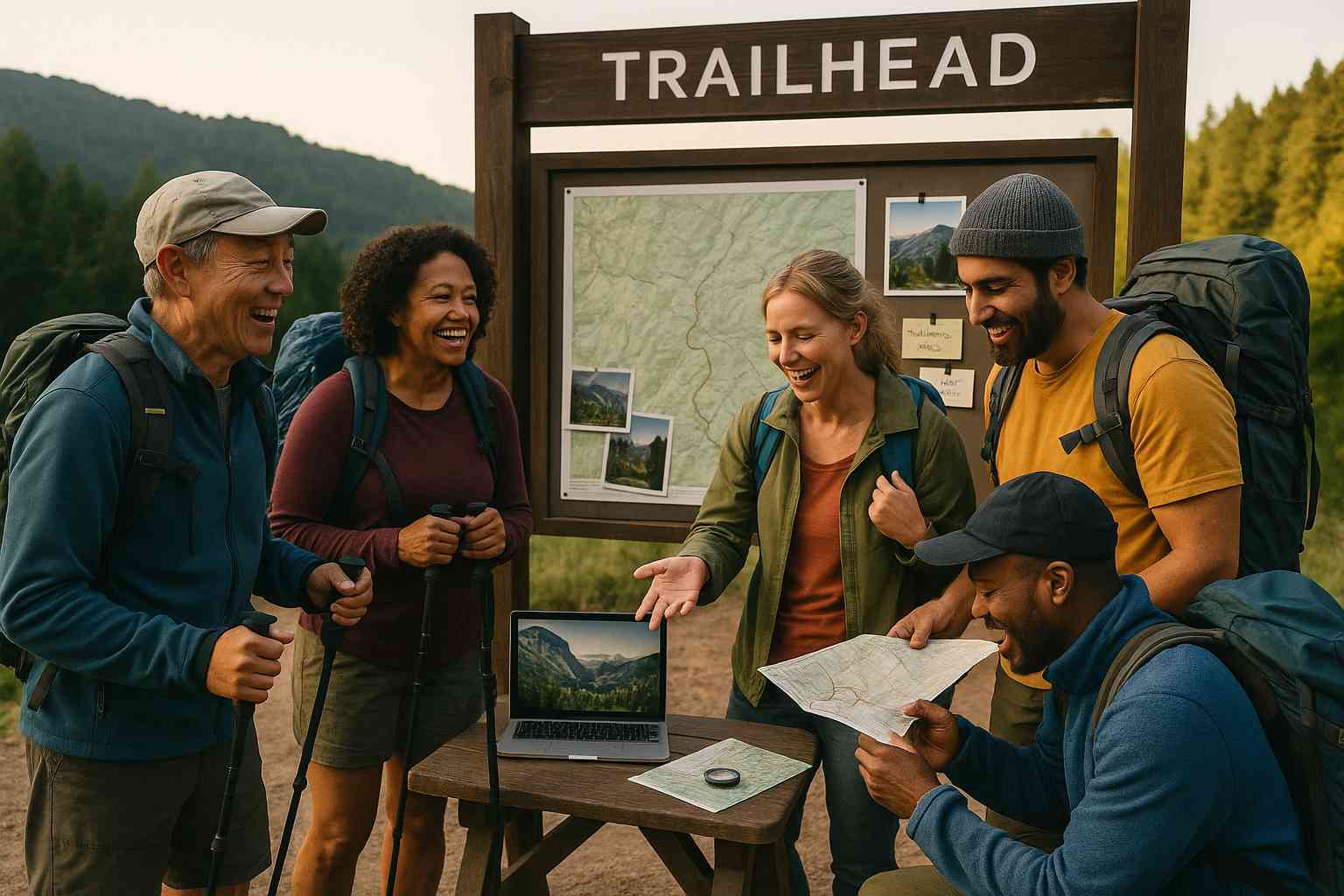
Instead of waiting for the perfect crew to appear, you can intentionally cultivate a small circle of reliable adventure partners. It doesn’t need to be big; 2–5 people with overlapping goals can be plenty.
- Start by inviting one friend or coworker for an easy local outing—short hike, sunset walk, simple overnight.
- Pay attention to who follows through, communicates clearly, and respects boundaries and safety.
- Gradually invite those people into slightly bigger trips or recurring plans, like “first Saturday hike” or “monthly campout.”
Over time, you’ll notice who’s reliable, who’s adventurous-but-safe, and who’s more talk than action. That information is valuable. Build your core team around those who show up in real life, not just in group chats.
Adventure Accountability: Turning Shared Goals Into Shared Action
Habits and time management are great on paper, but community is what keeps many people actually executing those plans. An accountability structure can be casual and still incredibly powerful.
Create a Simple Adventure Pact
Pick one person who genuinely wants similar things—more hikes, longer trips, better fitness. Make a light, realistic pact together, for example:
- “We’ll do one outdoor day together every month, no matter how small.”
- “We’ll check in every Sunday night about our training plan for the week.”
- “We’ll each choose one ‘stretch’ adventure this year and support the other in training and logistics.”
Write it down. Put it in a shared note or message thread. Not because it’s a legal contract, but because it nudges you both to treat it like something real.
Use Shared Tracking to Build Momentum
Tracking doesn’t have to be fancy. Even a quick shared log can make a huge difference:
- Create a shared spreadsheet or note where you both log hikes, training sessions, and completed trips.
- Drop a quick photo and one sentence after each outing into a group chat—what you did, what you learned.
- Celebrate streaks, not just big milestones—three weekends in a row outside is worth acknowledging.
When your friend logs a 6 a.m. training hike, it gently challenges you to stick with your own plan. You’re borrowing each other’s momentum, which is exactly the kind of “social system” BetterThisFacts encourages.
Safety, Trust, and Shared Values in Your Community
Not every outdoor partner is a good match, even if they love the same activities. Safety mindset, respect for boundaries, and alignment on risk tolerance matter a lot more than whether someone can crush uphill climbs.
Look for Safety-First Mindsets
Ask yourself a few questions about the people you go out with:
- Do they respect weather, terrain, and time cutoffs, or constantly push for “just a little further” when it’s no longer smart?
- Do they carry basic essentials (water, layers, navigation, first aid), or do they always assume someone else will have what they need?
- Are they willing to turn back when conditions aren’t right, even if it means “missing the summit”?
The best adventure partners aren’t the ones with the most impressive stories; they’re the ones you’d trust in a difficult situation.
Align on Expectations Before You Go
A five-minute conversation before a trip can save you from resentment later:
- Agree on pace: chill, moderate, or “let’s push it”?
- Clarify the goal: photo stops and exploring, or focused mileage?
- Discuss comfort levels around exposure, weather, early turnarounds, and splitting up (ideally, you don’t).
It might feel overly formal the first time you do it, but it quickly becomes a normal part of planning. And it keeps your community feeling safe, not stressful.
Online Inspiration vs. Real-World Action
There’s a weird thing that happens online: you can feel connected to a massive “outdoor community” and yet still feel completely alone in your day-to-day life. The solution isn’t to ditch online spaces completely, but to use them as a bridge to real action, not a substitute for it.
- Use online trip reports and route guides as tools to plan your own adventures, not just as fuel for scrolling.
- Join skill-focused groups that teach navigation, first aid, or backcountry tips you can immediately practice.
- When possible, move connections offline—join an event, meet for a local hike, or attend a workshop together.
Every time you consume something, ask quietly: “Does this make me want to actually go outside, or just watch other people do it?” Then adjust what you follow accordingly.
Connecting Community Back to Habits and Time
Community doesn’t replace habits and time management; it amplifies them. The systems you build in Cluster 2 (habits) and Cluster 3 (time management) become easier to sustain when people around you are living in a similar rhythm.
- If you’re working on habit stacking for adventure training, share that plan with a friend and invite them to adopt their own version.
- If you’re using time blocks for weekend trips, coordinate with others so your “hike day” or “climb day” aligns.
- If you’re building mental resilience and an adventure mindset, talk honestly with your community about fear, doubt, and setbacks instead of only sharing highlight reels.
For a deeper dive into the internal side of this—courage, mindset, and resilience—pair this article with the dedicated guide on developing an adventure mindset and mental toughness for explorers over at this mindset-focused cluster post. It meshes closely with the “outer” community work you’re doing here.
Practical First Steps to Build Your Adventure Network
If this all feels a bit abstract, here’s a simple, concrete starting sequence you can follow over the next 30 days:
- Week 1: Create your adventure corner at home and put one visual cue (map, photo, goal list) in a place you see daily.
- Week 2: Join one local club, meetup, or group related to your main outdoor activity, and attend at least one event or group outing.
- Week 3: Invite one person—new or existing friend—on a low-pressure outing (short hike, walk in a nearby park, or gear-testing session).
- Week 4: Set up a tiny accountability structure: a shared note, a Sunday check-in, or a “one outdoor day a month” commitment with a buddy.
None of those steps are dramatic. But taken together, they quietly shift your identity from “someone who likes the idea of adventure” to “someone whose life is arranged around actually doing it.”
Conclusion: You Don’t Have to Do This Alone
Adventure is often marketed as a solo, heroic thing—one person against the elements, pushing beyond limits. But in real life, most long-term adventurers are quietly backed by strong networks and supportive environments. They have friends who understand why they’d rather spend a weekend on trail than at a mall. They have homes set up so that leaving for a dawn start is easy, not chaotic.
Building that kind of environment and community is not an overnight job. It’s a gradual, intentional process—very much in the spirit of BetterThisFacts: small, smart changes that compound over time. Rearrange a corner of your home. Send one message to one potential adventure buddy. Say yes to one group event that feels slightly outside your comfort zone.



Leave a Reply