
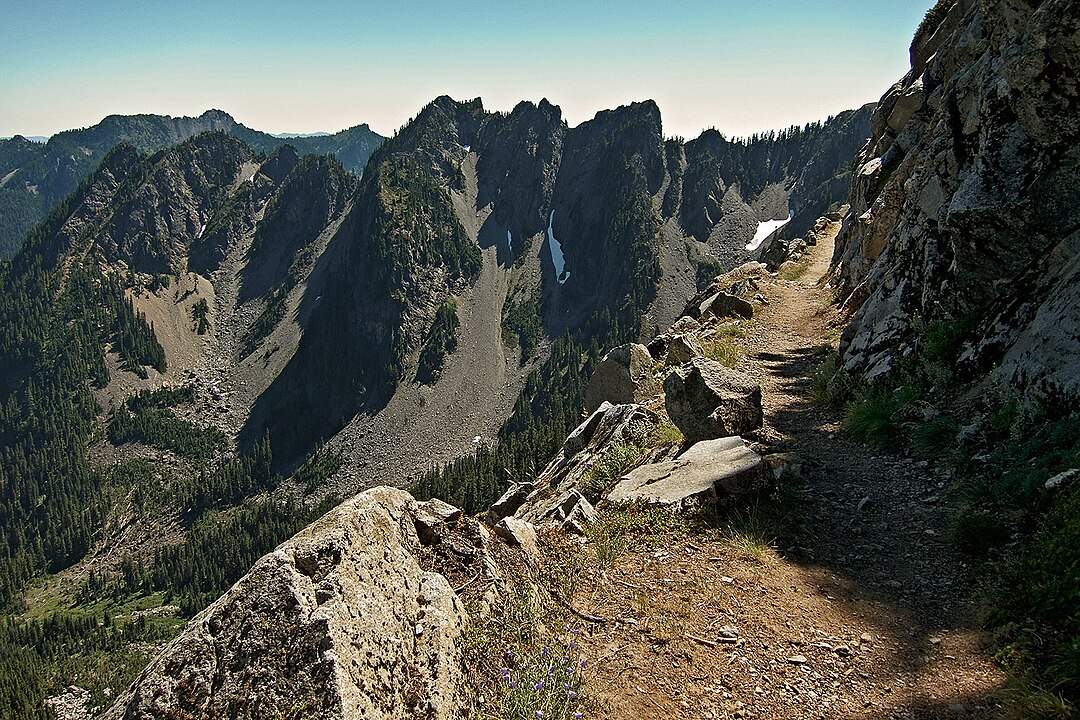
The Kendall Katwalk stands as one of Washington’s most iconic day hikes, featuring a dramatic granite ledge dynamited directly into a near-vertical cliff face along the Pacific Crest Trail. This bucket-list destination near Snoqualmie Pass combines the thrill of exposed ridge walking with spectacular views deep into the Alpine Lakes Wilderness, making it the perfect moderate-to-strenuous adventure for hikers seeking something truly memorable. Perhaps what makes the Katwalk so special isn’t just the famous ledge itself, but the complete hiking experience—old-growth forests, wildflower meadows, and panoramic mountain views that culminate in those heart-stopping moments walking along what feels like the edge of the world.
Located just 50 minutes from Seattle, the Kendall Katwalk offers big mountain adventure without the lengthy drive required for more remote destinations. This hike is part of our Ultimate Day Hikes Near Me (Washington Edition), which covers Washington’s top day trails for every skill level and interest.
Kendall Katwalk Trail Overview (Quick Facts)
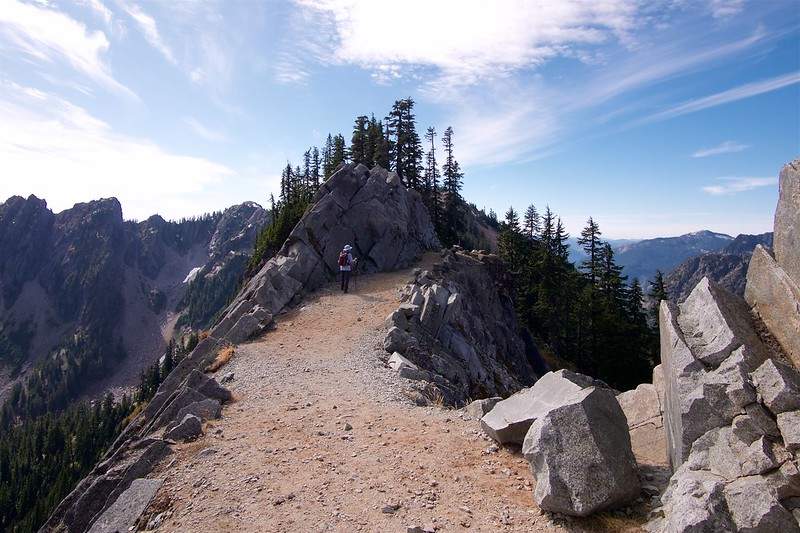
- Distance: ~11 miles round trip
- Elevation Gain: ~2,600 feet
- Difficulty: Moderate to strenuous
- Location: Snoqualmie Pass (I-90 corridor)
- Trail Type: Out-and-back on Pacific Crest Trail
- Family-friendly? Only for experienced teens, not suitable for young children
- Dog policy: Dogs allowed on leash (voice control acceptable in some areas)
- High Point: 5,400 feet at the Katwalk
Quick Comparisons
- Looking for a shorter beginner-friendly hike? Try the Mount Zion Trail
- Want more dramatic ridge views with wildflower meadows? Check out Skyline Divide
The Kendall Katwalk represents one of the most impressive engineering feats on the entire Pacific Crest Trail—the ledge was blasted into solid granite using dynamite, creating a safe passage across what would otherwise be an impassable cliff face. While the exposure looks dramatic (and feels it), the pathway itself is wide enough for safe passage, typically measuring 4-6 feet across.
Getting to the Kendall Katwalk Trailhead
- From Seattle (50 minutes): Take I-90 east to Exit 52 at Snoqualmie Pass. At the bottom of the off-ramp, turn left (north) under the freeway overpass. Within 200 yards, turn right onto the road leading to Pacific Crest Trail parking areas.
Parking Situation:
The main PCT northbound trailhead parking lot holds approximately 40-50 vehicles but fills quickly during peak season—often by 8:00 AM on weekends. When the main lot fills, overflow parking is available at the larger lot south of I-90, requiring a short connector trail walk to reach the main trailhead.
New Parking Considerations (2024-25):
Summit at Snoqualmie implemented paid parking in their lots as of the 2024-25 season. Free parking for Kendall Katwalk hikers remains available along SR-906 between the I-90 overpass and Commonwealth Restaurant, though space is limited. Check current conditions before your trip, as parking policies may continue evolving.
Pass Requirements:
A Northwest Forest Pass ($5 daily, $30 annual) or America the Beautiful Pass ($80 annual) is required for parking. We recommend keeping a reliable annual NW Forest Pass if you hike Washington trails frequently—it saves money and works at dozens of trailheads throughout the region.
The Trail Experience – Step by Step
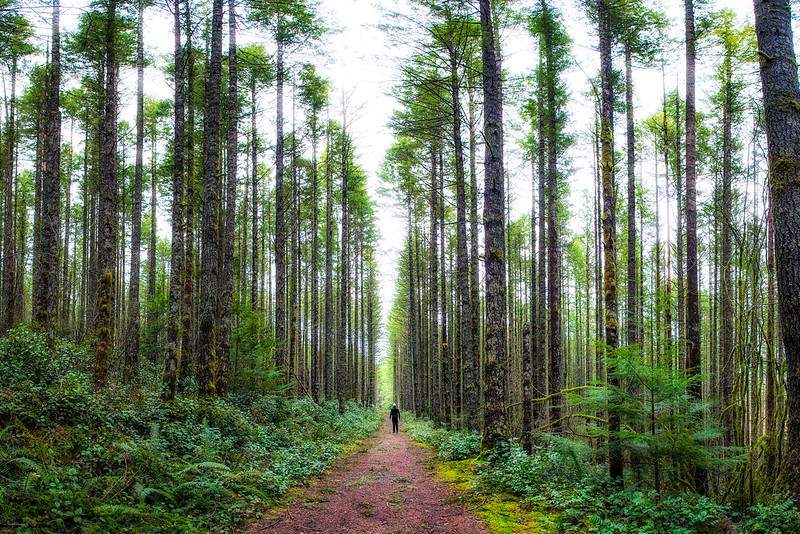
Forested Start (Miles 0-2.5)
The Kendall Katwalk follows the Pacific Crest Trail north from Snoqualmie Pass, beginning with a pleasant walk through old-growth forest. The first 2.5 miles gain elevation gradually—only about 900 feet—making this section feel quite manageable for most hikers. The trail stays mostly shaded under towering Douglas fir, western hemlock, and Pacific silver fir, with lush understory vegetation lining the well-maintained pathway.
Watch for blueberries in late August and early September—they’re a delightful trail snack when ripe. The trail winds through several long straight sections interspersed with gentle curves, and you may notice storm damage from the 2011 blowdown event that required significant trail clearing work.
At 2.25 miles, a small waterfall on the uphill side alerts you to two stream crossings ahead. These sequential crossings usually require careful stepping on rocks or logs, and trekking poles prove helpful here. In high runoff conditions, expect wet feet—if crossings seem dangerous, don’t hesitate to turn back and try another day.
Meadows & Alpine Views (Miles 2.5-4.5)
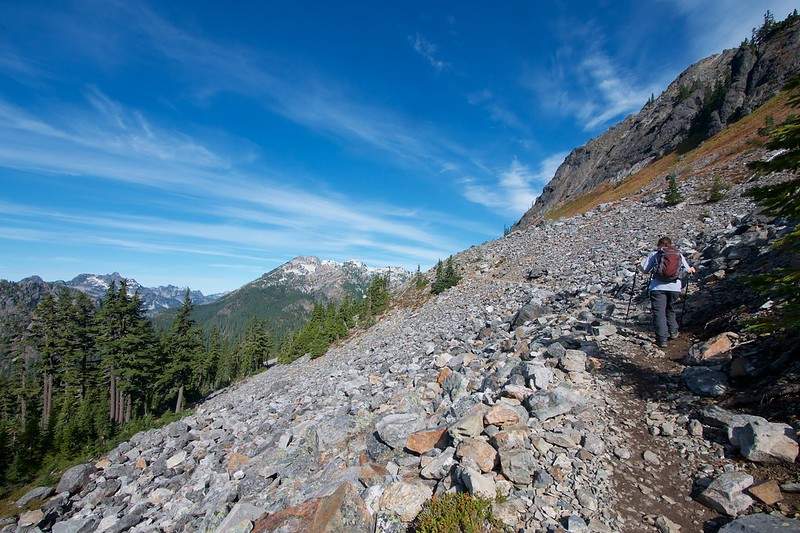
Around mile 2.5, the trail breaks out into open talus fields and officially enters the Alpine Lakes Wilderness. This transition marks a dramatic change in scenery—suddenly you’re surrounded by expansive views of surrounding peaks including Red Mountain, Guye Peak, and the beginning glimpses of deeper Alpine Lakes country.
The trail follows rolling terrain through this section, actually dropping about 100 feet before beginning the steeper climb toward the Katwalk. Wildflower displays peak from mid-July through August, featuring lupine, paintbrush, phlox, penstemon, and columbine creating spectacular color displays against the alpine backdrop.
Approaching the Katwalk (Miles 4.5-5.5)
The final push to the Katwalk involves steeper climbing through a mix of forest switchbacks and more open terrain. This section gains roughly 1,200 feet in the final mile, making it the most demanding portion of the hike. The trail can be somewhat confusing in a few spots—watch for where it “dodges sharply to the right” when following gravelly runoff areas through rock formations.
As you climb the switchbacks below Kendall Peak, views begin opening up dramatically to the south toward Mount Rainier and north along the Cascade Crest. This is where trekking poles provide extra stability, both for the steep terrain and the anticipation of the exposed ledge ahead.
The Katwalk Itself (Mile 5.5)
The Kendall Katwalk appears suddenly—often you won’t realize you’ve reached it until you’re actually walking on it. The ledge extends roughly 150-200 yards across the granite cliff face, with stunning views north and south along the Cascades and down into Gold Creek Valley thousands of feet below.
While the exposure feels dramatic, the pathway is actually quite safe for careful hikers—typically 4-6 feet wide with solid footing. The engineering here is remarkable; this section cost an estimated $10,000 per foot to construct using dynamite blasting. Take your time, enjoy the views, and capture photos, but keep dogs on leash and children close—there’s no margin for error if someone slips.
Optional Extensions Beyond the Katwalk
Many hikers continue beyond the Katwalk to reach Ridge Lake and Gravel Lake, adding 2-3 miles round trip but significantly enhancing the alpine experience. These pristine alpine lakes offer excellent lunch spots and even better scenery, making the extra effort worthwhile for those with energy remaining.
Best Time to Hike Kendall Katwalk
Summer Peak Season (Mid-July through August):
This represents the ideal window for Kendall Katwalk hiking. Snow typically clears from the Katwalk itself by mid-July, though patches may linger on north-facing slopes into August. Wildflower displays peak during this period, particularly the spectacular lupine and paintbrush shows in the Alpine Lakes Wilderness section.
Early Fall (September through October):
Fall offers excellent hiking conditions with fewer crowds, crisp air, and the beginning of fall color changes. Late September often provides some of the best weather of the year, with stable high pressure and crystal-clear mountain views.
Important Snow Safety:
Never attempt to cross the Katwalk when snow or ice covers the ledge. Even small amounts of snow make the granite surface extremely slippery and dangerous. Early season hikers should carry microspikes and be prepared to turn back if conditions aren’t safe.
If you’re looking for fall colors in alpine meadows with less exposure risk, the Skyline Divide Trail near Mount Baker offers spectacular autumn displays with different seasonal timing.
What to Pack for Kendall Katwalk
Footwear
Sturdy Boots vs. Trail Runners:
The Kendall Katwalk’s varied terrain—from forest floors to granite ledges—demands footwear with excellent grip and ankle support. Sturdy hiking boots work best for most people, providing the traction needed for the granite surfaces and stability for the long descent on tired legs.
Quality waterproof hiking boots handle creek crossings and potential wet conditions while offering the ankle support that proves valuable during the 2,600-foot descent. However, experienced hikers comfortable with trail runners may prefer them for the lighter weight over the 11-mile distance. Whatever you choose, ensure excellent tread patterns for grip on potentially wet granite surfaces.
Daypack & Hydration
- Pack Size (20-30L): A mid-sized daypack handles the Kendall Katwalk’s requirements comfortably. You’ll need space for extra layers, rain protection, substantial food, and safety equipment without the pack feeling cumbersome during the ridge walking sections.
- Water Requirements: The 11-mile distance and 2,600 feet of elevation gain demand serious hydration—carry 2-3 liters minimum, with more during hot weather. No reliable water sources exist after the early stream crossings, so bring everything you’ll need from the trailhead.
Hydration bladders work well for steady drinking during the sustained climbs, while traditional bottles allow easier rationing and refilling if you choose to filter from early season streams.
Trekking Poles
Trekking poles prove especially valuable for the Kendall Katwalk, both for the steep forest sections and for balance during creek crossings. They’re particularly helpful during the long downhill return when leg fatigue makes stability crucial. The poles also provide psychological comfort during the exposed ledge section, even though the trail itself is quite safe.
Clothing & Layering
- Weather Variability: Snoqualmie Pass weather can shift rapidly from sunny and warm to cold and windy, especially at the exposed Katwalk elevation of 5,400 feet. A three-layer system handles most conditions: moisture-wicking base layer, insulating mid-layer, and waterproof shell jacket.
- Essential Shell Layer: Even on perfect days, carry a lightweight rain jacket—afternoon thunderstorms can develop quickly, and the exposed nature of the Katwalk provides no shelter from sudden weather changes. Packable rain jackets work well, taking minimal pack space while providing crucial protection.
Breathable base layers become important for the sustained climbs, particularly the steep final section approaching the Katwalk. Avoid cotton materials entirely—when wet from sweat or rain, cotton loses all insulating properties and can contribute to hypothermia.
Tips for Hiking the Kendall Katwalk
- Start Early for Parking and Weather: Arrive at the trailhead by 7:00-8:00 AM during peak season to secure parking and avoid afternoon thunderstorms. Early starts also provide better light for photography and fewer crowds on the famous ledge section.
- Download Offline Maps: Cell service is spotty to nonexistent throughout most of the hike. Download trail maps to your phone using AllTrails, Gaia GPS, or similar apps before leaving home. While the main trail is well-established, the various junctions and potential extensions require careful navigation.
- Perfect for Intermediate Hikers: The Kendall Katwalk represents an excellent stepping stone for strong beginner hikers ready to tackle more challenging objectives. The distance and elevation gain require good fitness, but the trail itself is well-maintained and straightforward to follow.
If you want a more strenuous full-day alpine hike that really tests your limits, check out Big Heart Lake, which offers remote wilderness and pristine alpine lake destinations. For another adventurous ridgeline hike with less driving from Seattle, try Dirty Harry’s Peak, which provides similar thrills with more technical scrambling.
Wildlife, Flora & Photography
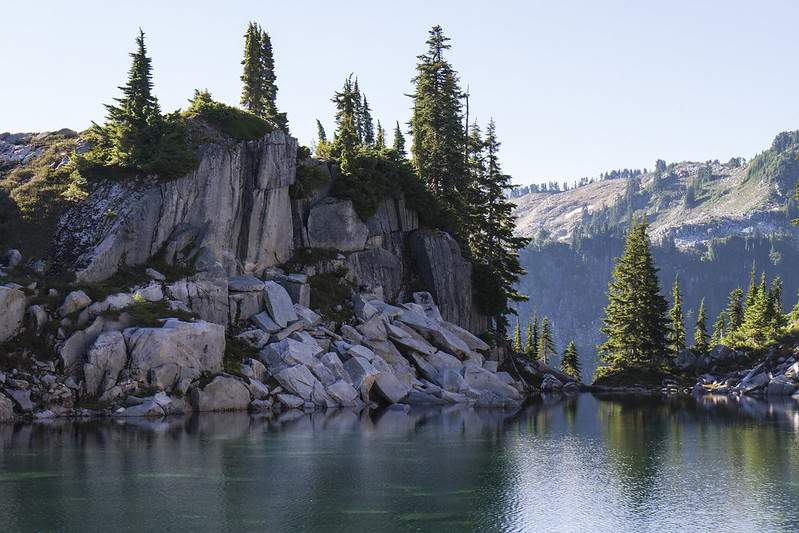
- Alpine Wildlife: The Kendall Katwalk region supports diverse wildlife adapted to high-elevation environments. Marmots are common sightings, often heard whistling from rocky outcrops before you spot them sunning on granite slabs. Pikas inhabit the talus fields, and mountain goats occasionally appear on distant ridges, particularly in the areas beyond the Katwalk toward Ridge and Gravel Lakes.
- Seasonal Flora: The wildflower displays along the Kendall Katwalk rank among the best accessible from Seattle. Peak blooming occurs from mid-July through August, with lupine, paintbrush, phlox, penstemon, and columbine creating spectacular color combinations. Early season features glacier lilies and other alpine flowers emerging from recently melted snow patches.
- Photography Opportunities: The Katwalk itself provides iconic photo opportunities, but the entire trail offers excellent subjects. Golden hour lighting (early morning or late evening) transforms both the granite cliff faces and wildflower meadows. The exposed nature of the Katwalk allows for dramatic lighting effects that change throughout the day.
Consider lightweight camera gear that won’t compromise your balance during the exposed sections. Phone camera stabilizers work well for social media shots, while ultralight DSLR setups handle more serious photography without excessive weight.
Permits, Safety & Leave No Trace
Permit Requirements:
Northwest Forest Pass or equivalent (America the Beautiful Pass, Senior Pass, etc.) is required for parking. No additional permits are needed for day hiking to the Katwalk, though overnight camping beyond the Katwalk requires backcountry permits in some areas.
Safety on the Katwalk:
While the ledge looks intimidating, it’s actually quite safe for careful hikers. The pathway measures 4-6 feet wide with solid granite footing. However, keep pets on leash and children close—there’s no room for mistakes. Never attempt to cross when snow or ice covers the granite surface.
Watch for early season icy patches, particularly during morning hours when temperatures drop below freezing overnight. Lightweight microspikes or yaktrax provide crucial traction for these conditions and weigh very little.
Leave No Trace Practices:
The popularity of Kendall Katwalk has led to increased impact on fragile alpine environments. Stay on established trails at all times, pack out all trash including food scraps, and avoid trampling through wildflower displays for photos. The alpine areas recover slowly from damage, making careful behavior essential.
Emergency Preparedness:
Carry basic safety equipment including navigation tools, first aid supplies, emergency shelter, and extra food and water. The remote location means help could be hours away in case of emergency. Consider personal locator beacons or satellite communicators for additional safety margins.
Alternative & Nearby Hikes to Kendall Katwalk
- For Easier Options: If the Kendall Katwalk feels too demanding, Mount Zion offers spectacular Olympic Mountain views with significantly less elevation gain and distance—perfect for families or newer hikers.
- For More Alpine Ridges: Skyline Divide provides even more dramatic ridge walking with sweeping views of Mount Baker and the North Cascades, though it requires a longer drive from Seattle.
- For Mount Rainier Views: Panhandle Gap delivers the ultimate Mount Rainier National Park day hiking experience, with glacier views and high alpine terrain that rivals anything in the Cascades.
- For Another I-90 Adventure: Dirty Harry’s Peak offers more technical scrambling and steeper elevation gain along the same I-90 corridor, making it perfect for building skills toward more advanced objectives.
Conclusion – Is Kendall Katwalk Worth the Effort?
The Kendall Katwalk delivers one of Washington’s most thrilling and memorable day hiking experiences, combining moderate challenge with extraordinary rewards. The unique granite pathway carved into the cliff face provides an adventure unlike anything else accessible as a day hike from Seattle, while the complete trail experience—from old-growth forests through wildflower meadows to dramatic alpine views—showcases the best of what the Cascades offer.
This trail suits hikers ready to step up from basic day hikes to more demanding adventures. The 11-mile distance and 2,600 feet of elevation gain require good fitness and preparation, but the well-maintained PCT provides secure footing and straightforward navigation throughout most of the route.
This trail is one of several must-do adventures featured in our Washington Day Hikes Guide, which covers spectacular hiking throughout the state from beginner-friendly forest walks to challenging alpine adventures.
Make sure you’re equipped with the right boots for granite traction, trekking poles for stability and creek crossings, and a reliable hydration system for the long distance before hitting the Katwalk. The famous ledge and surrounding Alpine Lakes Wilderness scenery await, offering memories that will last long after your legs recover from the adventure.





Leave a Reply